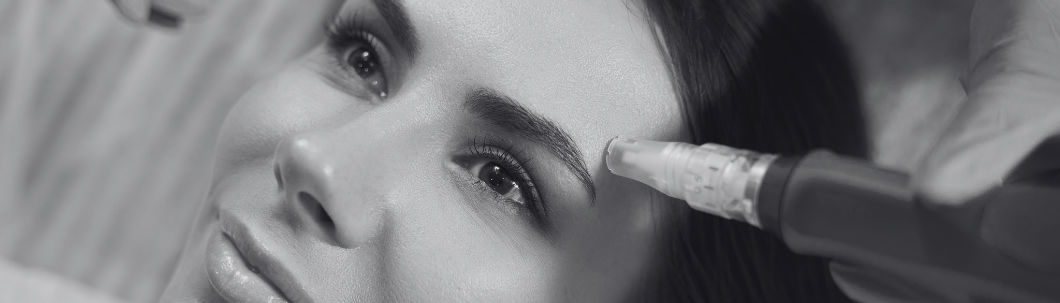
What is Microneedling?
Microneedling is a non-invasive but extremely effective rejuvenation treatment. This advanced treatment works deep within your skin using a handheld device with ultra-fine needles to create tiny, invisible channels. These micro-punctures instantly trigger your body’s natural healing response, boosting collagen and elastin production—the key to smoother, firmer, and healthier skin. Your skin will continue to improve for up to six months after treatment, reducing fine lines, wrinkles, scars (even acne scars), enlarged pores and hyperpigmentation.
BOOK YOUR MICRONEEDLING SESSION TODAY AND START SEEING RESULTS
BOOST COLLAGEN PRODUCTION AND TRANSFORM YOUR SKIN!
Benefits of Microneedling
The Treatment
At Malmin, we start with a peel to prep your skin, followed by a personalised blend of active ingredients that deeply penetrate through the tiny channels created during the treatment.
Each session is customised to your needs and skin type – our adjustable microneedling technology targets the right depth for different areas of your skin, addressing specific concerns like fine lines, wrinkles, scars, or enlarged pores.

Step 1 – The Consultation
We will discuss your skin type and any issues or problem areas that you would like to improve. Your treatment plan will be tailored to your individual needs. For the best results a course of treatment is recommended. We can monitor and adapt our approach, if required, to deliver the best possible results.

Step 2 – During Your Treatment
We will start your treatment by applying a gentle peel to remove any dead skin cells and impurities. The handheld microneedling device will then be used to create tiny punctures in the epidermis. This stimulates the production of collagen and elastin. Finally we will apply some active ingredient serums chosen for your skin. These products will penetrate deeper into your skin via the needle channels.

Step 3 – After Your Treatment
Your skin needs time to heal so you will need to avoid wearing ,makeup to the treated area for 24 hours following the procedure. We recommend that you stay out of direct sunlight for 72 hours to prevent any pigmentation. You should see the full results from your treatment after two weeks and the results can last up to six months. For the best results a course of treatment is recommended.
Glow This Spring
With Microneedling
One
Treatment
£149
Course of 3 Treatments
£399
Course of 5 Treatments
£650
This treatment is only available at Barbican
Discover the transformative power of Microneedling treatment for radiant, youthful skin. Book a FREE consultation today on 020 7251 2222